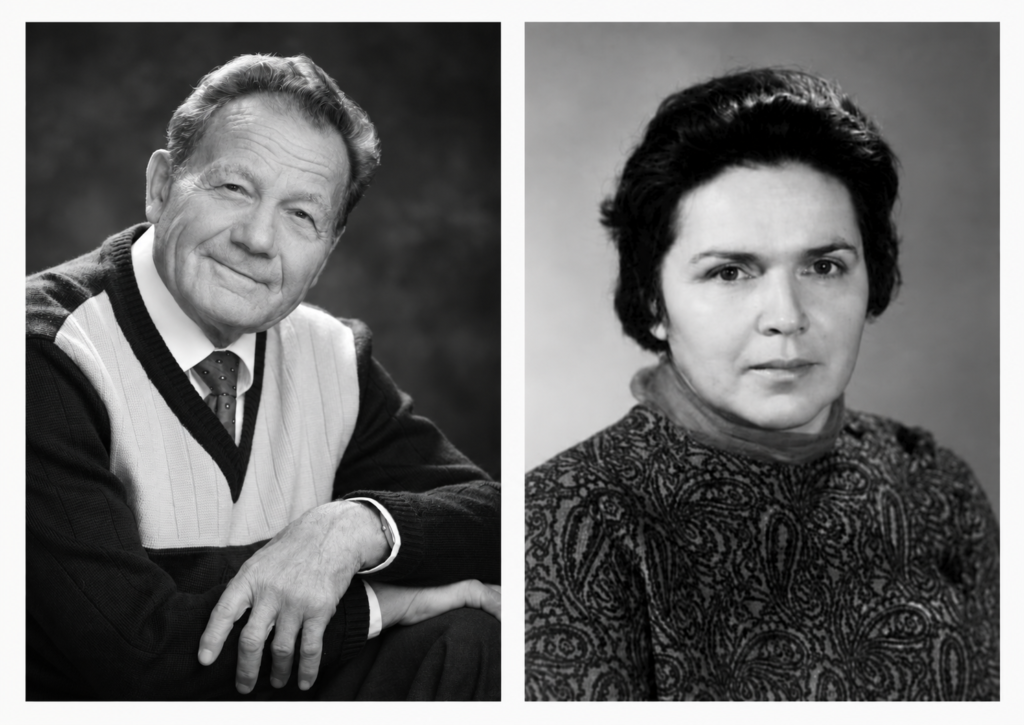
I was born in Kiev on August 23, 1965, into a family where teaching and scholarship belonged to everyday life. My mother, Galina Andronovna Kirichenko, was a Ukrainian linguist and philologist who held a doctorate in philology and taught at the university level. My father, Viacheslav Aleksandrovich Kudin, was a professor of philosophy with a doctorate in the field. Education had deep roots on both sides of the family, alongside traditions of military service and, on my mother’s side, the clergy.
Books were everywhere in the house where I grew up. Our family library contained more than twenty thousand volumes, many devoted to philosophy, science, and religion. I learned to read unusually early and, by the age of four, was already making my way through those shelves. Philosophy entered my life long before I knew it could become a profession.
My childhood was also shaped by physical discipline. I practiced wrestling and boxing and later studied karate and Chinese wushu. At the same time, another fascination was taking hold: the religious and philosophical traditions of the East. Mysticism and questions about consciousness gradually drew me toward philosophy as a field of serious study.
I entered Taras Shevchenko National University of Kiev, where I studied philosophy and graduated in 1989. The university brought me into contact with scholars whose influence remained with me long after graduation. In religious studies, I studied under Vladimir Karlovich Tancher and Yuri Anatolievich Kalinin, who later became the principal adviser for my dissertation. My interest in the workings of the human mind also led me to Gennady Michailovich Chaychenko, a professor of biological sciences known for his work on the physiology of higher nervous activity.
I studied higher mathematics under Anatoly Vladimirovich Skorohod, a distinguished mathematician and member of the American Academy of Arts and Sciences, and traditional and modern logic under Anatoly Evgenievich Konversky, one of Ukraine’s leading scholars in the field. Those studies changed the way I approached philosophical problems. They sharpened my sense of structure and strengthened my demand for logical precision, while the study of the nervous system kept questions about consciousness grounded in the human being who asks them.
After graduation, teaching became one of the central lines of my professional life. I taught philosophy at universities and other institutions of higher education across Ukraine, among them National Pedagogical Dragomanov University, the National University of Ukraine on Physical Education and Sport, and the National University of Life and Environmental Sciences of Ukraine in Kiev. The classroom was never separate from research for me. Teaching forced ideas to become clearer and continually returned philosophy to the presence of another mind.
Travel further expanded the intellectual world that books had first opened for me. I have visited more than sixty countries and encountered philosophical and religious traditions not only as texts, but as parts of living cultures. Moving between different intellectual worlds strengthened my conviction that ideas change as they cross languages and histories, while the questions beneath them endure.
Much of my later work has grown from that experience. I have tried to understand philosophical traditions from within the cultures that produced them while asking what they can still reveal about human life and the societies we create. In the United States, I am a member of the American Political Science Association.
Philosophy began for me among the books of my childhood in Kiev. It remains the intellectual ground of my teaching, writing, and life.